
Biomimetic 3D-Printed Platform for Personalized Mechanotransduction and Disease Modeling in Glaucoma
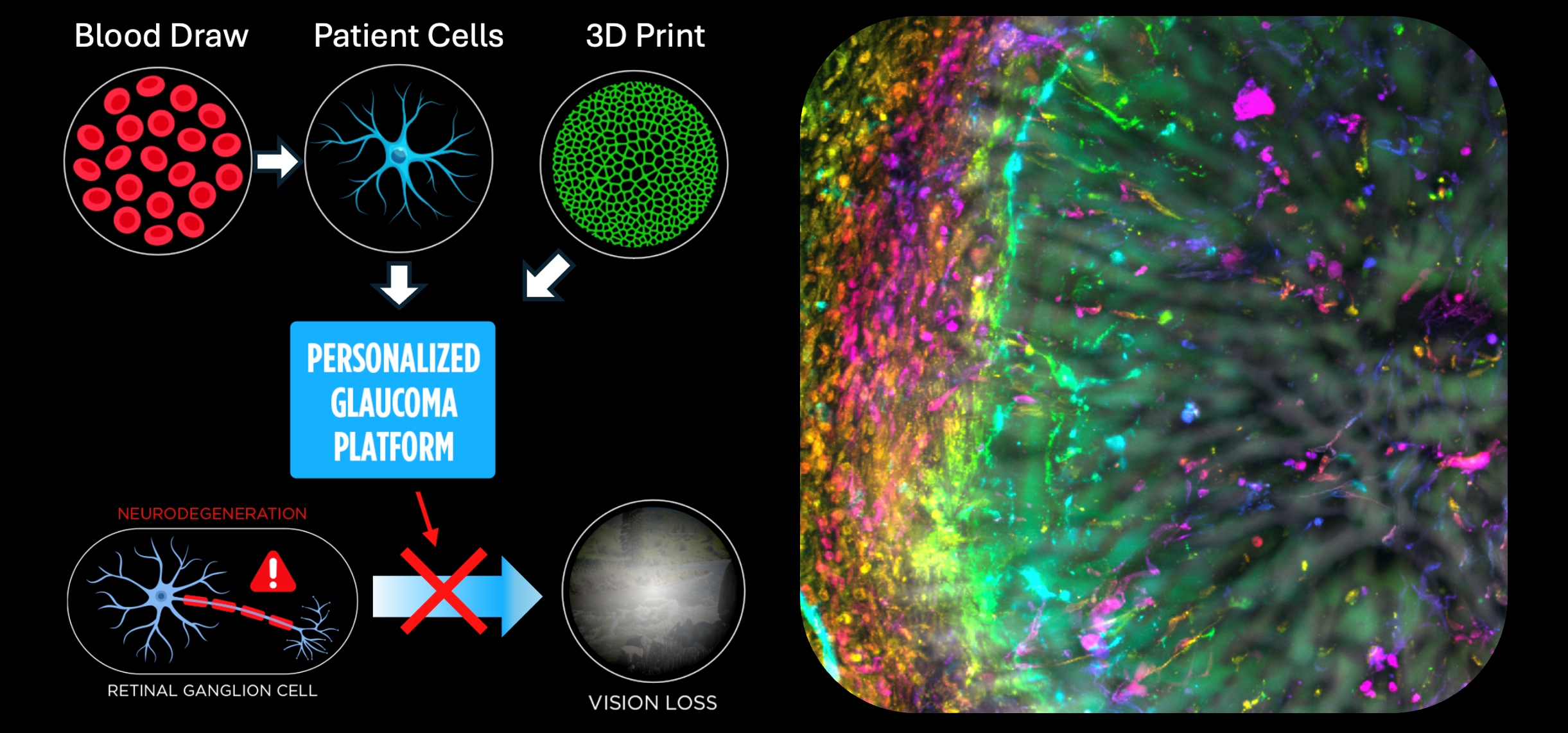
This invention comprises a biomimetic, 3D-printed platform that replicates the complex structural and mechanical microenvironment of the human lamina cribrosa. By integrating patient-specific data, this technology enables the precise study of mechanotransduction, genomic changes, and cellular responses to help understand and combat vision loss in glaucoma.
Description
The platform utilizes advanced 3D printing techniques to create cellularized, structural models of the lamina cribrosa, incorporating materials like electrospun gelatin:PCL and flexible polymers to mimic native biomechanical properties. It facilitates the controlled application of mechanical stressors, such as intraocular pressure (IOP), allowing researchers to observe how these forces influence matrix remodeling and cellular microenvironments.Furthermore, the system integrates microfluidic components and human-derived cells (e.g., hiPSCO-derived RGCs) to create a sophisticated in vitro model. This setup allows for the real-time monitoring of physiological parameters, such as intracellular calcium signaling and neurite outgrowth, providing a comprehensive assessment of how mechanical stress induces genomic and phenotypic changes associated with disease progression
Applications
- Pharmaceutical Drug Discovery: Platform for testing novel neuroprotective and anti-glaucoma therapies.- Personalized Medicine: Development of patient-specific disease models to tailor treatment plans based on individual structural and genetic profiles.
- Ophthalmology Research: Use as a standardized tool in academic and industrial laboratories for investigating the pathophysiology of POAG and other optic neuropathies.
- Diagnostic Tool Development: Identification and validation of biomarkers related to mechanotransduction and glaucoma progression.
- Biotech Contract Research: Services for ocular tissue engineering and disease modeling for external biotech and pharma partners.
Advantages
- High Bio-Fidelity: Accurately mimics the structural, mechanical, and cellular microenvironment of the human lamina cribrosa.- Personalized Modeling: Capable of incorporating patient-specific data to investigate individual susceptibility to disease progression.
- Mechanistic Insights: Enables direct observation of mechanotransduction pathways, linking elevated IOP to genomic changes and cellular dysfunction.
- Drug Screening Potential: Provides a platform for high-throughput or targeted testing of therapeutic compounds to prevent or reverse cellular damage.
- Reduced Reliance on Animal Models: Offers a human-relevant in vitro alternative for studying complex, pressure-dependent ocular pathologies.