
Fully Human Fabs Binding to the CD94/NKG2A Heterodimer
Recent studies have shown that tumor cells and HIV-infected lymphocytes are able to evade immune cell-mediated clearance by triggering an inhibitory signal mediated by CD94/NKG2A, a C-type lectin receptor expressed on 2060% of natural killer (NK) cells. A monoclonal antibody (mAb) blockade against CD94/NKG2A may provide novel therapeutic avenues for treating both cancer and HIV.
Description
In attempts to seek and develop a fully human mAb-mediated blockade against CD94/NKG2A, Pitt researchers have taken several complementary approaches for antibody discovery including soluble CD94/NKG2A preparation, panning of a phage-displayed antigen binding fragment (Fab) library against CD94/NKG2A, comprehensive binding assessment for isolated Fabs and IgG, and in vitro functional assays to observe restored NK-cell mediated cytotoxic activity. After panning with an IgG1 Fc-fused with CD94/NKG2A and CD94/NKG2C extracellular domain, one clone was isolated and shown to exhibit high specificity for the CD94/NKG2A while not binding to CD94/NKG2C. An affinity-matured second clone, is covered by yeast display technology, showed improved competition for binding, comparable to that for monalizumab, a humanized antibody inhibitor of CD94/NKG2A. These mAbs are expected to be the first fully human immune checkpoint inhibitors of CD94/NKG2A with enhancement of anti-tumor and anti-viral responses to CD94/NKG2A-positive immune cells. Taken together, these mAbs can restore NK cell- and CD8+ T cell-mediated toxicity activity with the enhancement of immunity by surrounding immune cells, providing novel therapeutic avenues for cancer and HIV treatment.Applications
- First-in-class fully human immune checkpoint blockers of CD94/NKG2A- Restore NK cell- and CD8+ T cell-mediated toxicity activity often inhibited in tumor cells and HIV-infected lymphocytes
- Competition for binding is comparable to experimental cancer drug monalizumab
- In HIV, anti-NKG2A antibody activates NK cells from HIV+ donors, enhances HIV-specific T-cell responses from HIV+ donors, reduces virion production from HIV+ donor cells after LRA treatment and lowers peak viremia in NK-infused humanized mouse model
Advantages
- Developed for applications in cancer and HIV.- The antibodies activated NK cells and enhanced antibody-dependent cellular cytotoxicity of tumor-targeting IgG1s both in vitro and in vivo.
- Bispecific engagers (BiNKs), generated by fusing NKG2A antibodies with tumor targeting binders, promoted immune synapse formation and directed cytotoxicity of NK and CD8+ T cells toward cancer cells.
- Unlike monalizumab, a humanized antibody inhibitor of CD94/NKG2A, these fully human antibodies are less likely to cause immunogenic problems.
Invention Readiness
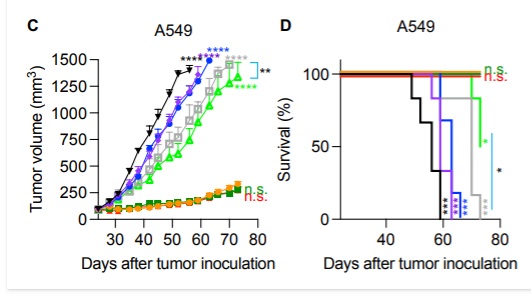
IN VIVO efficacy was demonstrated in a mouse xenograft model. In a human PBMC-engrafted NSG mouse xenograft lung cancer model, an anti-HER2 × anti-NKG2A BiNK markedly inhibited tumor growth as a monotherapy or in combination with pertuzumab.IP Status
https://patents.google.com/patent/US20240415889A1/Related Publication(s)
Shin, S., Kim, Y.-J., Macatangay, B. J. C., Cyktor, J. C., Hines, M. G., Sun, Z.-Y., Chen, K., Mellors, J. W., Dimitrov, D. S., Li, W., & Baek, D.-S. (2026). Discovery and preclinical evaluation of monoclonal antibodies and bispecific engagers targeting the NKG2A inhibitory receptor. Science Advances, 12(6). https://doi.org/10.1126/sciadv.adu0690