
Novel Treatment for Acetaminophen-Induced Acute Liver Failure
A University of Pittsburgh researcher has discovered that epidermal growth factor receptor (EGFR) inhibitors can effectively treat acetaminophen (APAP)-induced acute liver failure (ALF). This novel therapeutic approach can be successful even when treatment is delayed and could offer hope to many thousands of patients each year who experience APAP-induced liver injury (AILI).
Description
APAP overdose accounts for nearly half of all ALF cases in the US and many requiring liver transplantation. N-acetylcysteine (NAC) is a highly effective treatment for AILI but only if administered early, with delayed treatment impairing liver regeneration. With many patients presenting to medical centers too late for successful NAC treatment, there is an urgent need to develop treatment strategies for this underserved population. A recent discovery that EGFR signaling is upregulated in AILI patients unlocked the potential for a new therapeutic target. Animal studies have confirmed that the EGFR inhibitors (EGFRi), afatinib and osimertinib can prevent liver necrosis in AILI even when treatment is delayed beyond the NAC treatment efficacy window. This novel treatment could revolutionize the treatment of AILI, preventing the need for liver transplantation and AILI-associated deaths in late-presenting patients.Applications
• Acetaminophen-induced liver injury or failureAdvantages
NAC can treat AILI when administered soon after APAP overdose. However, in the real world, many patients present too late to receive NAC therapy and a liver transplant becomes the only treatment option remaining. With a global shortage of viable livers for transplantation, there is a growing need for AILI treatments that can be delivered at a later stage. Animal studies have demonstrated EGFRi can treat AILI long after liver toxicity has begun and the effective NAC treatment window has passed, potentially addressing this unmet clinical need. EGFRi therapy in combination with NAC, even when administered after the known effective NAC treatment window, can enhance the efficacy of EGFRi therapy further. Animal studies concluded that the EGFRi afatinib and osimertinib preserved liver regeneration, unlike some previously investigated EGFRi therapies. Additionally, afatinib and osimertinib are both clinically approved for the treatment of cancer with known safety profiles, reducing development risks and time to market.Invention Readiness
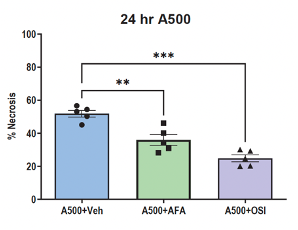
NAC is ineffective in mice four hours after APAP overdose. Animals with moderate and severe AILI were treated with afatinib or osimertinib at four hours post APAP — the timepoint at which NAC becomes ineffective — and assessed at 24 hours post APAP. EGFRi treatment reduced liver injury, centrilobular necrosis, and DNA damage. These studies suggest EGFRi therapy increases autophagy without impacting liver regeneration. Delayed treatment with osimertinib and NAC combined was more effective than delayed osimertinib monotherapy alone. Further research is required to investigate the potential therapeutic benefit in humans and to better understand the mechanism of action.IP Status
Patent PendingRelated Publication(s)
Jain, S., Mukherjee, R., Williams, G., Liu, J. J., Faccioli, L. A. P., Hu, Z., Florentino, R. M., Michalopoulos, G. K., Soto-Gutierrez, A., Liu, S., Locker, J., & Bhushan, B. (2026). Hepatocyte-Specific MET Deletion Exacerbates Acetaminophen-Induced Hepatotoxicity in Mice. The American journal of pathology, 196(2), 388–406. https://doi.org/10.1016/j.ajpath.2025.09.010
Jain, S., Williams, G., Mukherjee, R., Orr, A., Liu, J. J., Liu, S., Locker, J., & Bhushan, B. (2026). Hepatocyte-specific epidermal growth factor receptor (EGFR) deletion attenuates acetaminophen-induced liver injury in mice. Toxicological sciences : an official journal of the Society of Toxicology, 209(1), kfaf151. https://doi.org/10.1093/toxsci/kfaf151