
Novel Wound Management System
University of Pittsburgh researchers have developed a novel device and associated treatment method to promote wound healing following reconstructive surgery. Designed to form an isolated regenerative space over a wound site, this novel system can convert an off-the-shelf biologic matrix into a graftable vascularized wound bed in vivo through controlled management of the wound microenvironment, including managing hydration or introducing growth factors. This system could revolutionize wound management and allow for the treatment of complex wounds in previously difficult to treat patients.
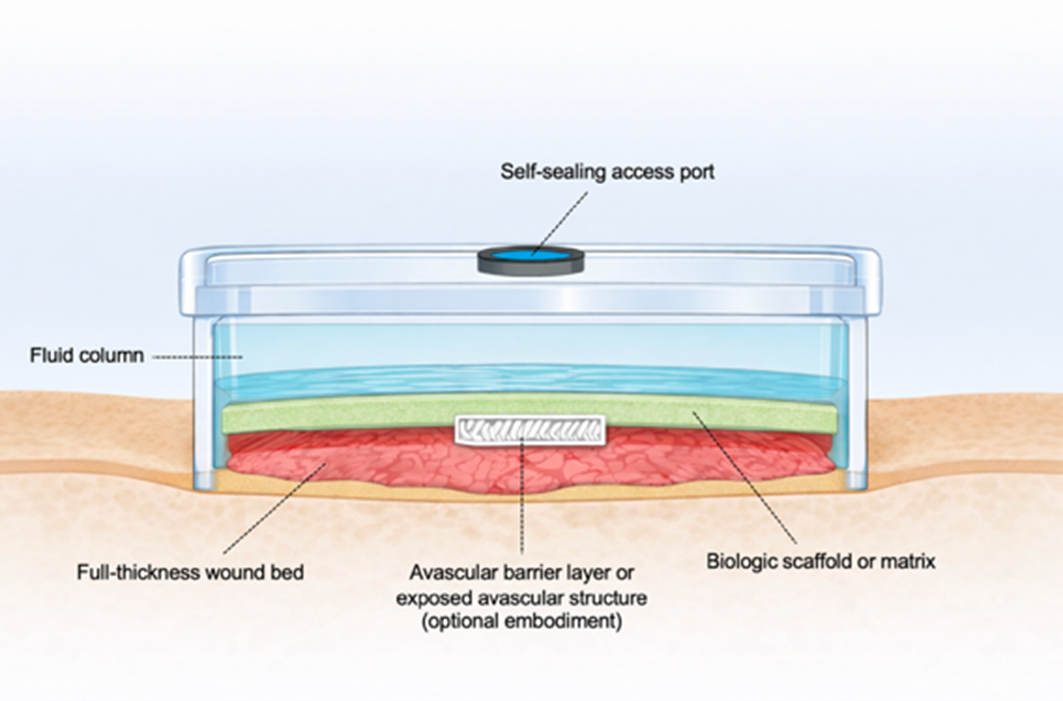
Description
A major challenge in reconstructive surgery is complex wounds where bones, tendons, implantable hardware, or other poorly vascularized structures are exposed. This novel sealed wound chamber system is designed to function as a regenerative bridge whereby avascular or poorly vascularized structures, in combination with a biological scaffold, are converted to vascularized tissue. This vascularized tissue can be used to support grafted tissue and other definitive coverage procedures supporting wound healing and reducing the risk of post-surgical complications.Applications
- Reconstructive surgery- Wound management
Advantages
Management of complex wounds with exposed avascular or poorly vascularized structures often require vascularized tissue transfer with flap reconstruction. However, flap procedures are high-risk, may be unavailable or unsuitable for some patients and can result in complications at the wound site. Other strategies including negative pressure therapy or scaffold placement do not reliably result in vascularization of the wound site. A lack of reliable, accessible wound healing options following reconstructive surgery remains an unmet need that urgently needs addressing.This novel system, through controlled wound microenvironment modulation, can convert avascular substrates into graftable vascularized tissue within two months and may remove the need for flap reconstruction altogether in some cases. The system has been designed to be fully sealed around the wound site and can be produced in multiple dimensions to support the treatment of a variety of wound sizes up to and including entire limbs.