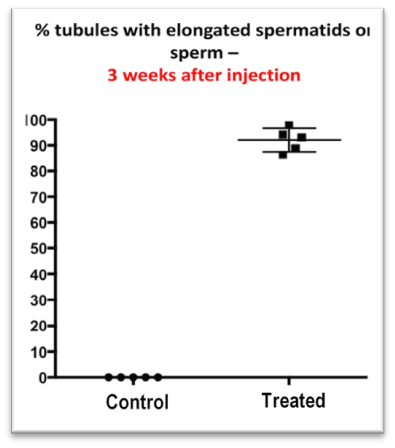
Azoospermia (no sperm in the ejaculate) affects 645,000 males between the ages of 20 and 50 in the United States alone. In 80 to 85 percent of these cases, the cause is non-obstructive azoospermia (NOA), which responds to current treatments less than half the time. The causes of NOA are frequently unknown, but it is believed that genetic mutations are responsible for half of idiopathic infertility. Genetic defects can be in the germ cells that produce sperm or in the surrounding somatic cells. Gene therapy can potentially be used to restore sperm production, but there are significant societal concerns about doing gene therapy in and around the germline because genetic modifications could be passed to the offspring. Policymakers regularly revisit this concern and have advised that germline gene therapy may be possible in the future. We have developed testicular somatic gene therapy and germline gene therapy methods for treating NOA that avoid the issue of passing genetic modifications onto the next generation.