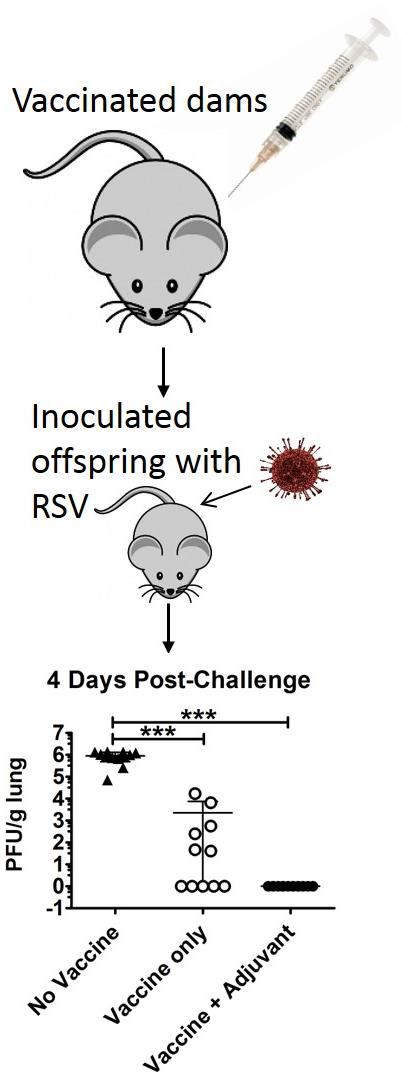
Respiratory syncytial virus (RSV) is an extremely common and highly contagious respiratory pathogen, which infects most children before their second birthday. Globally, severe cases of RSV are responsible for about 7 percent of deaths among infants between one month and one year of age. Even in the US, where deaths from RSV are rare, the virus hospitalizes more than 100,000 children and infants each year, and these severe infections during infancy can lead to asthma later on. Past attempts to vaccinate against RSV have been ineffective because of poor antibody production by the infant’s immature immune system. Even worse — for reasons that remain unclear — direct infant vaccination with some immunogens heightens the risk of a severe respiratory illness called vaccine-enhanced respiratory disease (VERD). By vaccinating the mother instead, the infant receives her antibodies.