Technologies

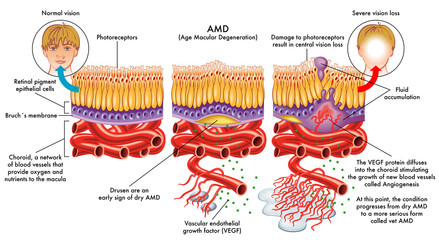
Age-related macular degeneration (AMD) is the world’s leading cause of blindness among the elderly. A projected 288 million people worldwide will live with AMD by the year 2040, and the cost of treatment already exceeds $350 billion. The dry type of AMD affects approximately 80-90% of individuals with the disease, its cause is unknown, and it usually progresses more slowly than the wet type. University of Pittsburgh researchers have tested a novel concept that shows significant improvement beyond AMD. It will provide unique insights into aging and age-related and neurodegenerative diseases, where lysosomal dysfunction and cellular heterogeneity are important pathophysiologic features.